
Wilder
Gardens
LLC
Native Plant Landscaping
WHY PLANT NATIVE
The website likely will not change much in any way over the next 6 months much.
If you ever have any questions call one of us!
WilderGardensLLC.Com
959-951-2428
All Mail can be sent to 46 Slocomb Terrace Groton CT 06340
---Explore the page for more information.
WilderGardensLLC is a coalition of Native Plant and Ecological Horticulturalists/Landscapers dedicated to environmentally friendly and sustainable practices. We service Southern New England.
Services
Pollinator Gardens
Designated gardens of pollinator attracting native plants along the foundation of a house or building or a separate installation in the lawn.

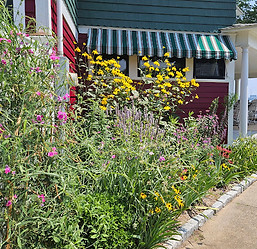
Why use natives?
Where should I begin?
Native plants have lived here for millennia. They are adapted to our regions climate and don't need nearly as much TLC as ornamentals such as peony, daylilly, roses, delphinium etc.


Garden Maintenance
Basic ongoing care includes weeding, trimming, cleanup, deadheading, mulching, edging, thinning and planting. During planting seasons (September-May) Ill plant free plants that have been divided from established gardens to enhance biodiversity and color.

Shade Gardens
Native foliage and pollinator plants for areas along the house or foundation that are in deep shade. Also for a detached garden in a shady area of the lawn.

Meadows
A meadow is a large free-form area of mixed flowering perennials, grasses and forbs. Meadows have season-long appeal and low maintenance once established. You can transform sections of crabgrass, steep slopes and hard to mow areas into a pretty, flowering meadow.

Photo by Martha Lazar

Woodlands
If you have an unsightly, mossy patch of lawn, I can transform it into lovely woods. I can also transform rooty or rocky areas, and lawn that just won’t grow in the shade. These areas naturally want to be woodlands. Woodlands generate an open, park-like understory with paths, native flowering shrubs, small trees and groundcovers.


Consultations
An onsite consultation to go over what sort of work you're looking for. From planning a new garden to spring cleanup. Consultations last between 15 minutes to over an hour and can happen from 7am to 7pm. Consultations are $50/hr for new clients. Current client consults are free

Natural Stone Paths and Patios
Natural stone comes from the earth: fieldstone, blue stone and others. Natural stone blends into your landscape as transparently as plants. It can easily be shaped into curves and pleasing patterns, unlike concrete pavers or patio blocks. We usually install stone work in late summer or winter.
Unlike pavers or patio blocks, imperfections are features instead of flaws.
Perfect patios end up looking horrible with the slightest crack of a block or chip of a paver.


INVASIVE PLANT REMOVAL
What is it?
The most important thing to do on your property or landscape.
Invasive Plant species are everywhere including your property. You might've even planted one without knowing it. These plants are still commonly sold at nearly every retail nursery and plant center. Invasive Plant species are plants that come from different continents or parts of the globe. These plants are new to our ecosystems and have none of the checks and balances that they had in their native territories. They then have a competitive edge over natives and can smother local ecosystems reducing biodiversity.
Why is it important?
1 Burning Bush can produce THOUSANDS of seeds. These seeds are then dispersed by birds and other wildlife spreading into local ecosystems. In Connecticut nearly every park and preserve has some number of invasives species present. Many areas are completely inundated with no native plants in the understory. One big storm or hurricane will then blow down the remaining native trees resulting in the death of that forest and in place an impenetrable thicket of invasive plants. We do not want this on our public or private lands. These areas are usually infested with ticks, reduce the ability to traverse the land and eliminate biodiversity.
How its done and costs:
WilderGardensLLC offers a competitive and affordable rate of bulk invasive chop down and removal. This is done at 250-300$ a man per day.
Typically I send my guy Brian out to do this work.
Process:
Selection of area and Consultation
Chop down and piling of brush. (Brush chipping or removal can be requested but that can be costly.
Yearly chop down should take half or a quarter as long as initial work.
We do not use any herbicides.
These areas will need successive chop downs but will need diminishing work as the natives fill back in. The bulk of the work is done at the beginning with the chop down of large invasive plants. These plants will then try to come back with vengeance using the remaining energy in their roots in their futile attempt to re-establish. The second chop down will kill much of the infestation and native plants will start to establish.
Invasive Plant Removal is different for different types of plants.
For large shrubs and trees such as: Burning bush, Buckthorn, Barberry, Multiflora rose:
Successive chop down is needed but will diminishes year to year.
For Herbaceous plants like Mugwort, Purple Loosestrife, Phragmites:
Need successive chop downs over the course of the year. Best thing to do is to chop while they are flowering.
For vines like Bittersweet, Porcelain, Black Swallow wort, Japanese honeysuckle, etc
Need intensive management/digging or regular maintenance.
Bittersweet and Porcelain vine climb trees and produce thousands of seeds. These vines can be chopped at the base to reduce seeding. Then can be cut every few years to prevent regrowth.
In sunnier spots they need regular mowing or digging out to fully eliminate.
Due to the Nature of Invasive Species, there is no way to full eliminate them from our landscape. That doesn't mean we shouldn't do something about them. If left unchecked, they will continue to reduce biodiversity locally and regionally.